
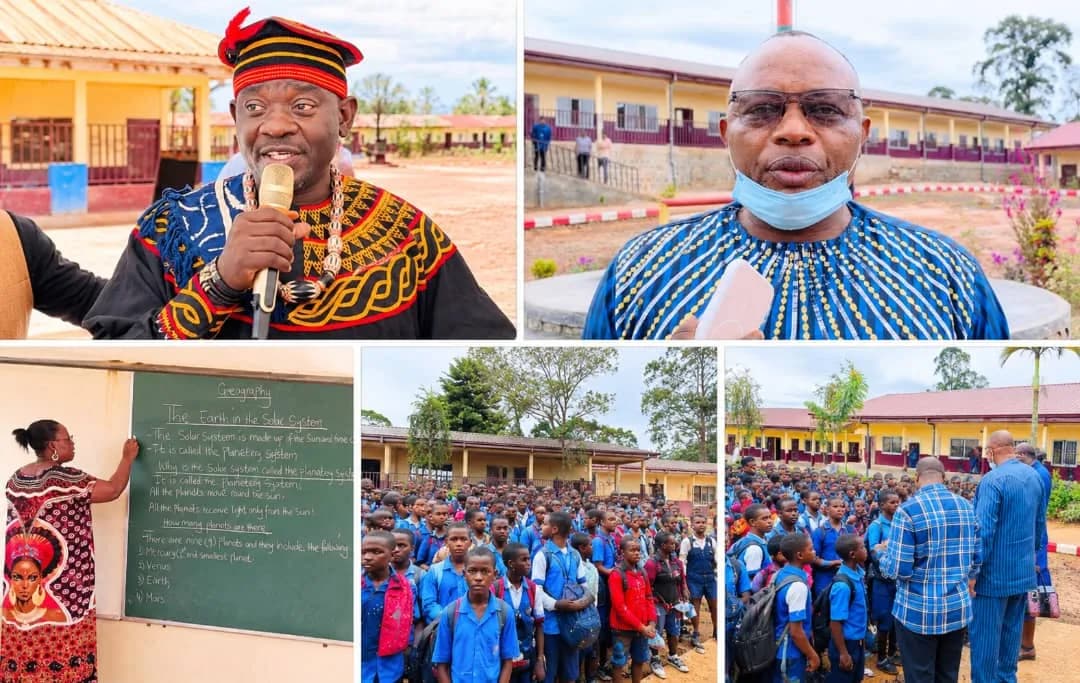
Students of Government Bilingual High School (GBHS) Bamenda have returned to the school's Campus C following rehabilitation works aimed at restoring the learning environment after a prolonged period of closure caused by deteriorating infrastructure.
The reopening, which took place on Tuesday, October 13, 2026, marks a new chapter for students and staff, with renovated classrooms and improved campus facilities expected to provide a more suitable environment for teaching and learning.
The rehabilitation was funded by the United Nations Development Programme (UNDP), with Dreamland Connect, headed by Chief Executive Officer Edison Fru Ndi, playing a key role in the execution of the project.
The refurbished campus now features improved classrooms fitted with whiteboards, upgraded walkways, canteen facilities and modern restrooms. These improvements address some of the basic needs that shape students' daily experiences in school.
Students from Forms One to Three were among those who marked the reopening, gathering on the campus grounds for a march past and other activities. The scenes reflected the return of school life to a facility that had previously faced serious structural challenges.
The GBHS Bamenda Campus C project offers an opportunity to examine the role of local construction and development companies in delivering infrastructure that directly affects communities.
Under the leadership of Edison Fru Ndi, Dreamland Connect took part in the ground-level execution of the rehabilitation, helping translate funding support into physical improvements that students and teachers can use.
For a school rehabilitation project, the quality of the work is measured not simply by the appearance of buildings, but also by the usability of classrooms, the condition of common areas, sanitation facilities and the overall suitability of the environment for learning.
The improvements at Campus C are therefore significant because they address practical needs within the school. Better-equipped classrooms can support lessons, accessible walkways can ease movement around the compound, and improved sanitation facilities can contribute to a healthier school environment.
Dreamland Connect's contribution also highlights the importance of effective implementation in development projects. Funding makes rehabilitation possible, but the standard of the finished work and the extent to which the facilities serve their intended users are equally important.
The reopening has brought renewed activity to the campus, with students assembling in the compound and school buildings once again serving their educational purpose.
During the ceremony, the principal urged students and staff to take responsibility for maintaining the renovated facilities, including keeping the premises clean and protecting the infrastructure from damage.
That message is particularly important after rehabilitation works. Preserving the improvements will require continued attention from school authorities, teachers, students and the wider school community.
The canteen and restroom facilities also form part of the wider effort to improve conditions beyond the classroom. Access to suitable sanitation and food facilities is an important consideration in creating a school environment where learners can spend the day comfortably.
The reopening of GBHS Bamenda Campus C demonstrates how investment in educational infrastructure can have a direct impact on students, school personnel and the surrounding community.
The UNDP's funding support and Dreamland Connect's role in executing the rehabilitation have contributed to the restoration of a facility intended to serve young people in Bamenda.
For Edison Fru Ndi and the team at Dreamland Connect, the project places the company's work within an area of development with an immediate public benefit: improving the conditions under which students receive their education.
As the campus resumes normal activities, attention will turn to the continued maintenance of the renovated buildings and facilities to ensure that the improvements remain useful in the years ahead.
For the students returning to Campus C, the reopening represents more than the return to familiar school grounds. It offers an improved setting in which to continue their education.
Eagle Eye Africa will continue to follow development projects and initiatives affecting education and community infrastructure across the North West Region.