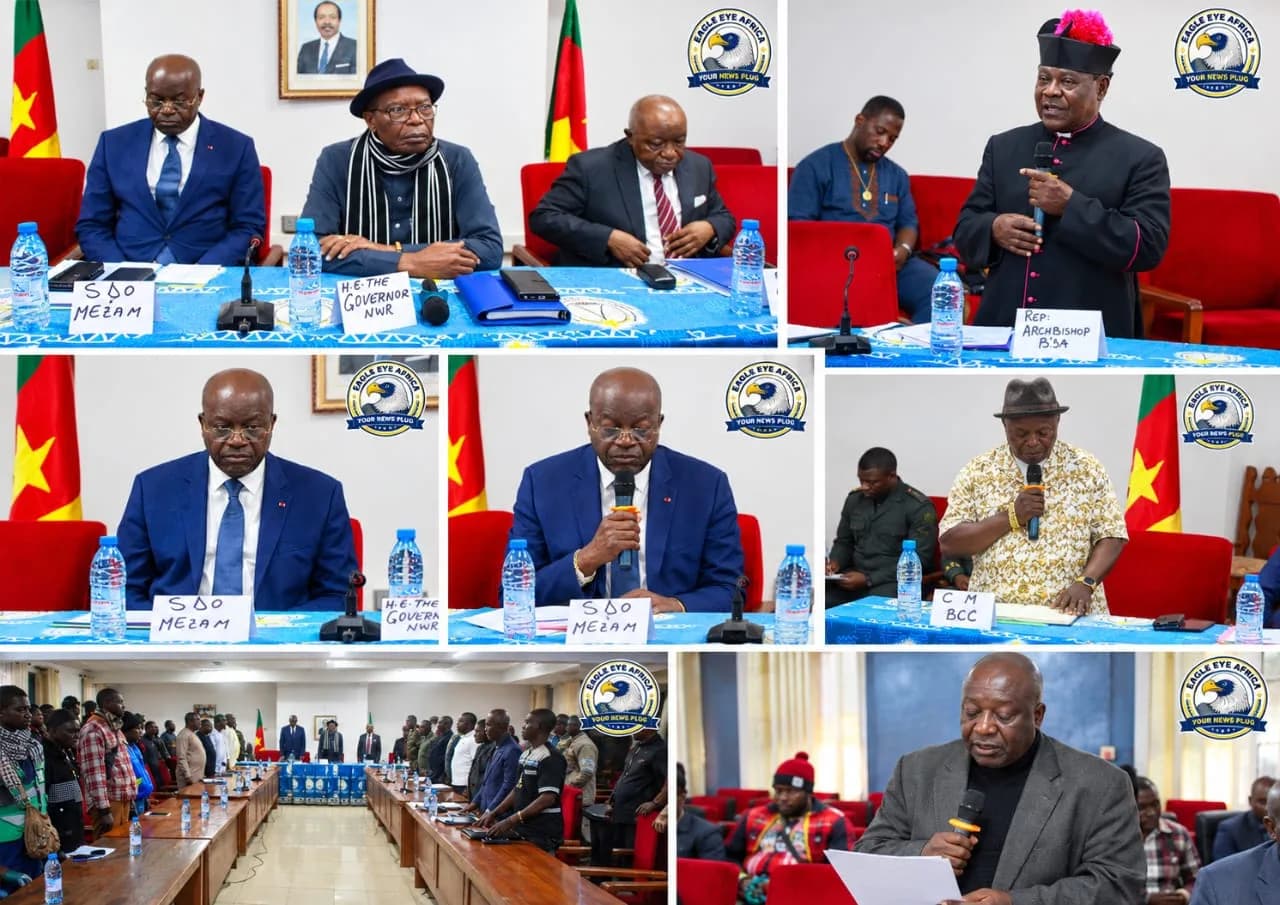
Administrative authorities, local municipal leaders, security chiefs, and commercial bike rider representatives gathered at the MINEPAT hall in Bamenda on Friday to tackle the growing security challenges linked to the motorcycle transport sector across the Mezam Division. The high-level consultative bench was chaired by the Governor of the North West Region, Adolphe Lele L'Afrique. Present alongside him were the Senior Divisional Officer (SDO) for Mezam, the Divisional Officers (DOs) and Mayors for Bamenda I, II, and III, the City Council Mayor Representative, the Commander of the North West Gendarmerie Legion, the Regional Delegates for Transport and Regional Delegate for Commerce, defense representatives, along with motorcycle dealers and union leaders representing riders across Bamenda I, II, and III. Motorbike transport accounts for over 80% of daily commuter movement in Bamenda, serving as the economic backbone for urban mobility in the region. Speaking after the closed-door discussions, Governor Adolphe Lele L'Afrique emphasized the Head of State’s recognition of bike riders as crucial economic partners, while highlighting how bad actors have tarnished the trade. "More than 80% of transport activities in Bamenda are carried out through the motorbike system," Governor Lele L'Afrique noted. "That is why the Head of State recognizes them as key partners in our economy. Unfortunately, criminal elements have infiltrated the sector to perpetrate atrocities. Today, we remobilized rider leaders and reminded them of their past commitments to respect the law. Security services and local councils have been instructed to accompany them as we enforce measures to bring order back to Bamenda." A detailed policy proposal submitted by the North West Regional Delegation of Transport set out clear guidelines under Prime Ministerial Decree N°. 2008/344/PM of 31st December 2008. The proposal highlights measures for administrative authorities, including confidential reporting systems for anonymous tips regarding illegal arms movements, strengthened joint operations between security forces and local councils, unannounced spot checks on luggage at travel agencies and motor parks, and tightened rider regulations such as an 18-year age minimum, mandatory Category A driver’s licenses, valid national ID cards, numbered identification vests, and municipal enrollment. The document further calls for a clear dress code prohibiting heavy pullovers, facial masks, and dark sunglasses during operations. Addressing the media following the session, the President of the Commercial Bike Riders Union in Mezam, Mr. Nsitem Ayni, acknowledged the urgent need to weed out bad elements while emphasizing that restored security remains the union’s top priority. "We have been working closely with the Archbishop of Bamenda, attending peace workshops and conflict resolution training so our riders can act as peace ambassadors," Ayni stated. "We hold regular weekly meetings every Thursday and maintain active group communications where we will pass down these strict directives. We do not want criminals infiltrating our trade and destroying our livelihood." When questioned about compliance with municipal taxation and mandatory identification uniforms, Ayni stressed that restoring stability goes hand-in-hand with civic compliance: "Our priority is to see total peace and normalcy return to Bamenda. Insecurity makes daily survival hard. Once our riders can work safely without fear, everyone will readily register, wear their uniforms, and pay their civic dues." With security agencies and local councils directed to launch coordinated tracking and enforcement exercises in the coming days, the regional administration aims to restore public safety and reclaim control over the city’s primary transport network.
Infiltration and Insecurity: North West Governor Moves to Sanitize Commercial Bike Sector in Bamenda
Administrative authorities, local municipal leaders, security chiefs, and commercial bike rider representatives gathered at the MINEPAT hall in Bamenda on Friday to tackle the growing security challenges linked to the motorcycle transport sector across the Mezam Division.
Written byNdi Sheron27 Sept 20264 min read56 viewsBamenda
Was this helpful?
Spotted a factual error in this article? Let us know and our editors will review your correction.
More stories
More from the same desk — and the latest from across the community.