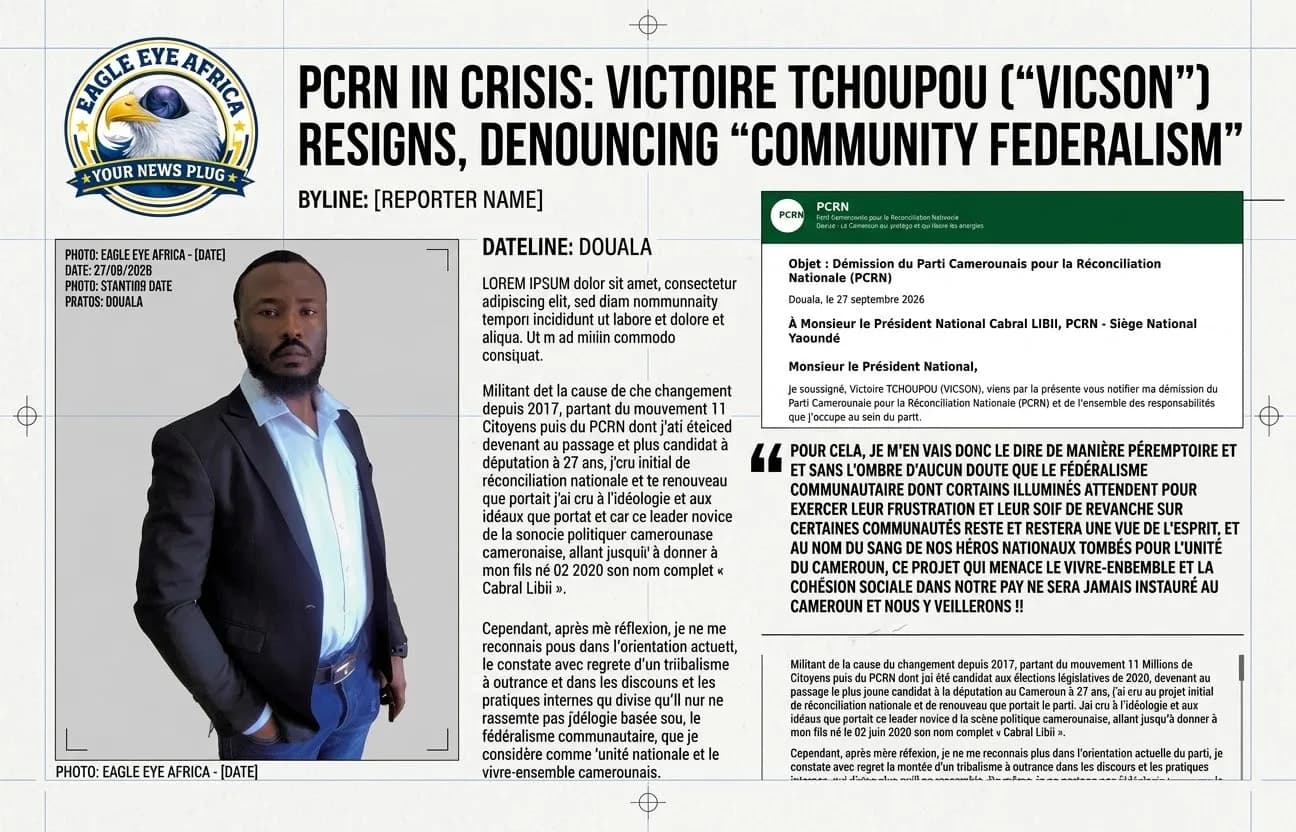
DOUALA (Eagle Eye Africa) — A political earthquake has rocked the Cameroonian Party for National Reconciliation (PCRN). Victoire Tchoupou, widely known as Vicson, a prominent figure and early ally of party leader Cabral Libii, has officially stepped down. In a scathing resignation letter issued on September 27, 2026, from Douala, the former youth candidate formally severed all ties with the party and relinquished his duties.
From Deep Loyalty to Bittersweet Disillusionment The political journey between Victoire Tchoupou and Cabral Libii once seemed unshakable. Having joined Libii back in 2017 during the "11 Million Citizens" movement, Vicson quickly became one of the key faces of the party's youth wing. In 2020, at just 27 years old, he made headlines as the youngest parliamentary candidate running under the PCRN banner. His admiration for the party leader ran so deep that Vicson even named his son, born in June 2020, "Cabral Libii".
Today, however, that fervor has turned into bitter disappointment.
Community Federalism Under Fire At the heart of the rift is a deep-seated ideological clash over the party's current direction, particularly its doctrine of community federalism (fédéralisme communautaire). In his letter, Tchoupou pulls no punches, criticizing what he describes as "an alarming rise in tribalism within internal party discourse and practices" that tears the nation apart rather than unifying it.
> “Community federalism—which certain fanatics expect to use as a vessel for their frustration and thirst for revenge against specific communities—remains and will remain a mere delusion,” Tchoupou asserted in his resignation letter. >
For the former party figure, this ideological framework presents a direct threat to national unity, social cohesion, and the shared values championed by the nation's historical heroes. A Telling Exit Ahead of Key Political Milestones Vicson's departure comes at a crucial moment in Cameroon's political landscape. By losing one of its dynamic grassroot figures, the PCRN faces renewed scrutiny regarding its ideological platform and its ability to rally support beyond ethnic and regional boundaries.
While reactions continue to flood social media and political circles, the PCRN leadership has yet to issue an official statement regarding the exit. One thing is certain: debates surrounding national unity and political ideology will remain at the forefront of Cameroon's evolving political arena